Clay & Body field guide
How to Track Pottery From Wet Clay to Sold
A studio workflow for tracking every piece through drying, bisque, glazing and firing: IDs, stage photos, bone-dry checks and planned kiln loads.
A busy studio shelf hides a lot: which bowls are bone dry, which mugs were already bisqued, which piece belongs to a commission. A simple tracking habit stops pieces from cracking because they were fired too early, or sitting forgotten because nobody knew they were ready.
The stages every piece goes through
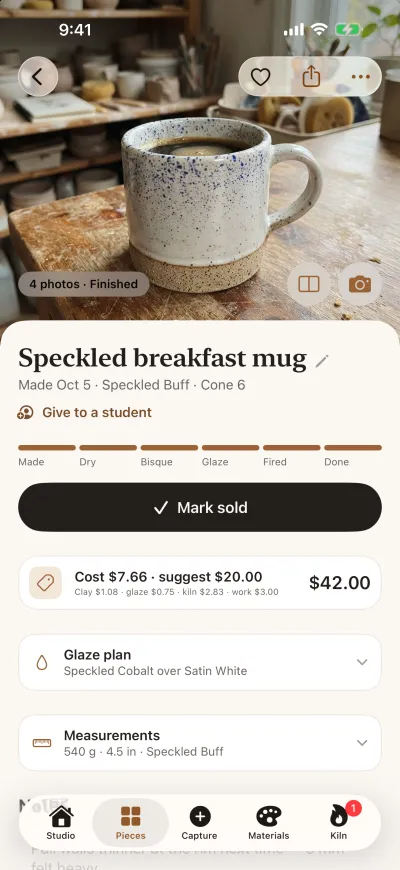
| Stage | What it means | What to note |
|---|---|---|
| Wet / just made | Freshly thrown or built | Clay body, weight, date, form |
| Leather-hard | Firm enough to trim and join, still damp | Trimmed? Handle added? |
| Bone dry | No free water left; ready for bisque | Date it reached bone dry |
| Bisque fired | First firing done; porous and handleable | Firing number |
| Glazed | Glaze applied, waiting for the glaze firing | Glazes and layers, application |
| Glaze fired | Finished surface | Firing, shelf, result, photo |
| Finished / sold | Ready to sell, kept or given away | Price, buyer, channel |
Step 1: give every piece an ID
An ID can be as simple as the date plus a number (1103-04) scratched or written with underglaze pencil on the base. It survives both firings and connects the pot on the shelf to its notes. For a series made together — six mugs from one bag of clay — add a series letter so you can track them as a group.
Step 2: photograph each stage
A quick photo when the stage changes is the most useful record you can keep. It shows the wet size next to the fired size, the glaze before and after, and becomes material for process and journey videos. Use the same spot and background so photos line up.
Step 3: know when a piece is really bone dry
Firing pieces that still hold water is a classic way to crack or blow them apart in the bisque. Drying time depends on wall thickness, the clay, humidity and airflow, so a fixed number of days is only a guess. Two practical checks:
- The cheek test. Hold the pot against your cheek or inner wrist. If it feels cool, water is still evaporating; bone-dry ware feels room temperature.
- The weight test. Weigh the piece each day. When the weight stops dropping, the free water has gone.
To plan ahead, the drying time predictor estimates how long a form will take from its thickness and your conditions. If a load must go in sooner, a slow, low-temperature start in the bisque program (sometimes called candling) drives off remaining moisture more gently.
Step 4: plan kiln loads from what is ready
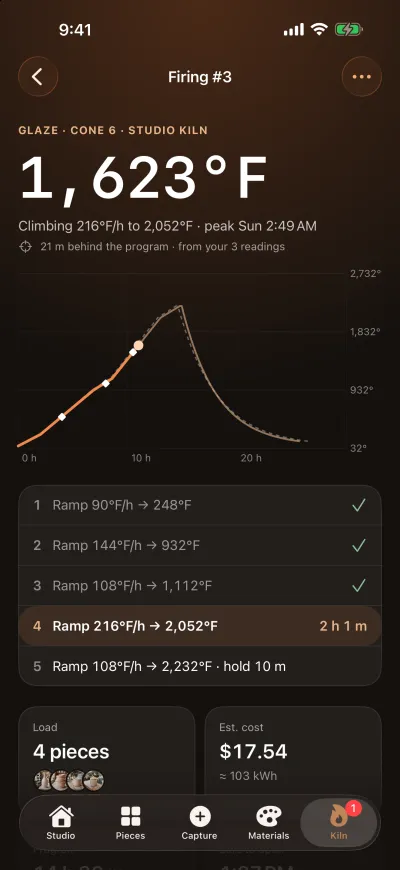
With stages recorded, a bisque load is simply "everything at bone dry", and a glaze load is "everything glazed". That list tells you whether it is worth firing now or waiting a day for a fuller kiln — a fuller kiln costs less per piece. How to load a kiln covers the shelf-by-shelf planning.
Record size and weight while it is wet
Write down the wet height and diameter and the clay weight you started with. Compared with the fired size, they give you your own shrinkage figure (see the clay shrinkage calculator), and the starting weight lets you repeat a form exactly — the clay weight calculator includes a throwing weight chart to start from.
Paper, spreadsheet or app?
Any system works if you keep it up. A paper card per board of pots, a spreadsheet with one row per piece, or an app all do the job. Choose the one you will update with clay on your hands; the best tracking system is the one that takes seconds, not minutes.
Frequently asked questions
What are the stages of pottery?
Wet (freshly made), leather-hard, bone dry, bisque fired, glazed, glaze fired, and finished or sold.
How do I know if pottery is bone dry?
Hold it against your cheek or inner wrist: if it feels cool, water is still evaporating. Weighing the piece each day also works — when the weight stops dropping, the free water has gone.
How should I label pottery pieces?
Give each piece an ID such as the date plus a number, written on the base with underglaze pencil or a stamp so it survives both firings, and keep the same ID in your notes or app.
Use these calculations with the procedure
Editorial note
Found a source or calculation that needs correction?
See how formulas are selected, how changes are recorded, and how to send a reproducible correction in the ClayCalc methodology.
Continue reading